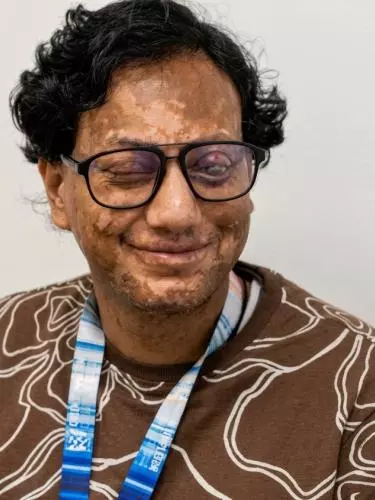
I am an historian of science, medicine and technology, with a particular interest in the history of medicine in colonial India.
My own experience of blindness first drew me to these questions. At the residential school where I studied in Dehradun, I used assistive technologies such as screen readers and tactile diagrams, and later learned that the institution itself had its origins in colonial medicine and the rehabilitation of war-blinded soldiers.
While studying History at St Stephen’s College, University of Delhi, a lecture on the Scientific Revolution gave me a historical lens for these experiences and sparked my interest in the history of science.
I am now pursuing the MSc in History of Science, Medicine and Technology at Green Templeton College, Oxford.
My dissertation examines ophthalmological practices in colonial India: how eye disease was treated, how blindness came to be classified as curable, preventable or permanent, and what those distinctions meant for the people they described. It draws principally on missionary sources. More broadly, I am interested in how medical knowledge, institutions and technologies took shape in modern South Asia, and in the encounters between colonial and Indian medical traditions.
Alongside my academic work, I have been closely involved in accessibility and student leadership. As President of the Enabling Unit at St Stephen’s, I led initiatives on inclusive education and the use of assistive technologies. I have also researched how visually impaired students in Indian universities use artificial intelligence tools, presenting this work at the International Conference of Asian Libraries, where it received the Best Paper Presentation Award. My work in student leadership and inclusion was recognised with the St Stephen’s College Centenary Award.
I am deeply grateful to the Ertegun Graduate Scholarship Programme for the opportunity to pursue my research at Oxford and to join its interdisciplinary community. I look forward to contributing as an historian, researcher, and advocate for accessibility, and to learning from scholars whose work spans different fields, cultures and perspectives.